Training for Your Hardest Outdoor Climb: Complete Preparation Guide
You've found your project—that route that captures your imagination and pushes your limits. Now comes the crucial phase: preparing your body, mind, and skills to send it. This comprehensive guide will walk you through every aspect of training for your hardest outdoor climb, from physical preparation to mental tactics and logistics.
Phase 1: Assessment & Planning (Weeks 1-2)
Analyze Your Project
Before you start training, thoroughly research your target route:
- Grade and style: Is it technical face climbing, powerful overhanging, or endurance-testing? Each requires different training emphasis.
- Crux sequences: Identify the hardest moves. Can you replicate them in the gym?
- Rock type: Granite, limestone, sandstone? Each has unique texture and hold characteristics.
- Length: Single pitch vs multi-pitch changes your endurance requirements.
- Conditions: What season is optimal? Temperature, humidity, and friction matter.
Assess Your Current Level
Honestly evaluate where you stand:
- What's your current climbing grade indoors and outdoors?
- How big is the gap between your current level and the project?
- What are your specific weaknesses (finger strength, endurance, technique)?
- How much time can you realistically dedicate to training?
- When do you plan to attempt the route?
Realistic Timeline
For a route 1-2 grades above your current outdoor redpoint, plan for 8-12 weeks of focused training. For routes 3+ grades harder, expect 3-6 months of preparation. Rushing the process increases injury risk and decreases your chances of success.
Phase 2: Building Foundation (Weeks 3-6)
Strength Training Protocol
Finger Strength Focus
- Hangboard sessions: 2-3x per week
- - Max hangs: 3-5 sets of 7-10 seconds at 90-100% intensity
- - Rest 3 minutes between sets
- - Train relevant grip positions (open hand, half crimp, pinch)
- Campus board work: 1-2x per week (if route requires power)
- - Ladder sequences for recruitment
- - Bumps for contact strength
- - Never more than 20 total moves per session
- Build comprehensive grip strength across all hold types
Endurance Training
- ARC training: 20-30 minutes of continuous easy climbing
- - 2x per week
- - Stay at 50-60% intensity
- - Focus on movement efficiency
- 4x4s: Four problems, four times through
- - 1x per week
- - Climb at 75-80% max difficulty
- - Rest minimally between problems
- Linked boulder problems: Chain 3-5 problems continuously
- - Simulates pumpy sequences
- - Practice shaking out and recovering
Technique Refinement
- Perfect movement patterns: Slow, deliberate practice on easier terrain
- Footwork drills: Silent feet, precise placement, heel hooks, toe hooks
- Body positioning: Hip mobility, twist locks, drop knees
- Efficiency: Minimize energy expenditure on every move
Skin Conditioning
Don't overlook this critical component. Your skin must be ready for the specific texture of your project:
- Match rock texture: Train on holds that simulate your project's surface
- Progressive adaptation: Follow systematic skin conditioning protocols
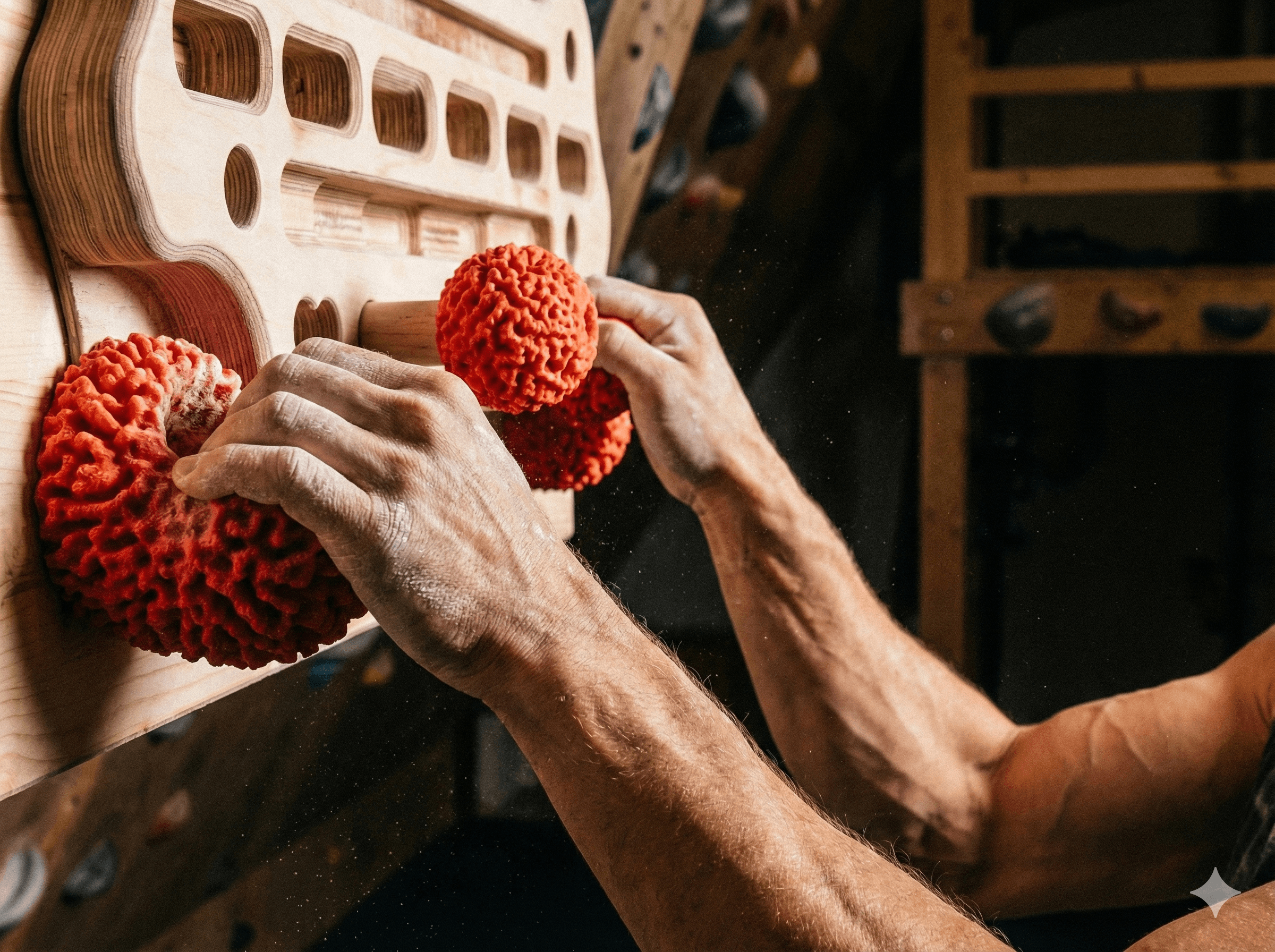
- Texture training: Use textured training equipment that mimics real rock
- Consistent exposure: 4-5 sessions per week of moderate-intensity texture work
Phase 3: Specialization (Weeks 7-10)
Route-Specific Training
Now focus intensely on movements and sequences specific to your project:
- Replica problems: Build boulder problems that mimic crux sequences
- - Match angle, hold types, and move complexity
- - Practice until movements feel automatic
- Limit bouldering: Push your maximum grade
- - 2x per week
- - Low volume, high intensity
- - Rest 5-7 minutes between attempts
- Redpoint training: Practice going all-out on routes
- - Work routes at or slightly below project grade
- - Practice fighting through pump
- - Build mental toughness for send efforts
Volume Management
As you get closer to your attempt window, manage training load carefully:
- Reduce frequency: Quality over quantity
- Maintain intensity: Keep touching hard grades
- Increase rest: Allow full recovery between sessions
- Monitor fatigue: Watch for signs of overtraining
Phase 4: Peaking & Tapering (Weeks 11-12)
The Taper
Two weeks before your attempt, begin reducing volume while maintaining intensity:
- Week 11: 70% normal volume
- - One limit session
- - One moderate endurance session
- - One light technique session
- Week 12: 40% normal volume
- - One short, intense session (3-4 hard problems)
- - Light movement/technique work
- - Focus on rest and recovery
- Final 3 days: Complete rest or very light movement only
Mental Preparation
- Visualization: Mentally rehearse every move of your project
- - Spend 10-15 minutes daily visualizing success
- - Include sensory details (texture, holds, body position)
- - Practice dealing with difficult scenarios
- Anxiety management: Develop pre-climb routines
- - Breathing exercises to manage nerves
- - Positive self-talk patterns
- - Focus cues for staying present
- Process over outcome: Focus on executing well, not just success
Logistics & Preparation
Pre-Trip Planning
- Conditions: Check weather, temperature, and seasonal considerations
- Beta: Study videos, topos, and route descriptions thoroughly
- Gear: Ensure all equipment is in good condition
- Logistics: Arrange travel, accommodation, and climbing partners
- Backup plans: Have alternative routes in case conditions aren't ideal
On-Site Strategy
- Day 1-2: Warm-up climbs, route inspection, working moves
- - Don't burn yourself out
- - Focus on learning the route
- - Identify rest positions
- Day 3-4: Begin attempts when conditions are prime
- - Warm up thoroughly but don't overtire
- - Give yourself multiple chances
- - Rest adequately between attempts
- Stay flexible: Adapt to conditions, body feel, and unexpected factors
Don't Let Skin Be Your Limiter
After months of training, don't get shut down by unprepared skin. Systematically condition your hands for the specific texture of your project with FrictionForm's textured training system:
- • Simulate granite, limestone, or sandstone texture
- • Progressive conditioning from subtle to aggressive
- • Build resilience without causing damage
- • Train at home between gym sessions
Common Pitfalls to Avoid
Overtraining
More is not always better. Signs you're overdoing it:
- • Persistent fatigue that doesn't resolve with rest
- • Declining performance despite continued training
- • Elevated resting heart rate
- • Mood changes and irritability
- • Increased injury susceptibility
Neglecting Antagonist Training
Balance pulling strength with pushing exercises to prevent injuries:
- • Push-ups and dips for chest and triceps
- • Shoulder external rotation exercises
- • Core work for stability
- • Posterior chain strengthening
Inadequate Recovery
Recovery is when adaptation happens. Prioritize:
- • 7-9 hours of quality sleep nightly
- • Proper nutrition with adequate protein
- • Active recovery on rest days
- • Stress management techniques
Key Takeaways
- Analyze your project thoroughly before beginning training
- Build a strong foundation before specializing
- Train finger strength, endurance, and technique simultaneously
- Don't neglect skin conditioning—it can make or break your attempt
- Taper properly in the final 2 weeks before your trip
- Develop mental strategies for dealing with pressure
- Stay flexible and adapt your strategy based on conditions
- Remember that the journey is as valuable as the send
Training for your hardest climb is a holistic process that challenges you physically, mentally, and emotionally. By following a structured approach and preparing every aspect systematically, you dramatically increase your chances of success. Even if you don't send on your first trip, the training process will make you a stronger, more capable climber. Need help with specific aspects of training? Check out our guides on pegboard training and skin conditioning.