Pegboard Training: Complete Guide for Athletes
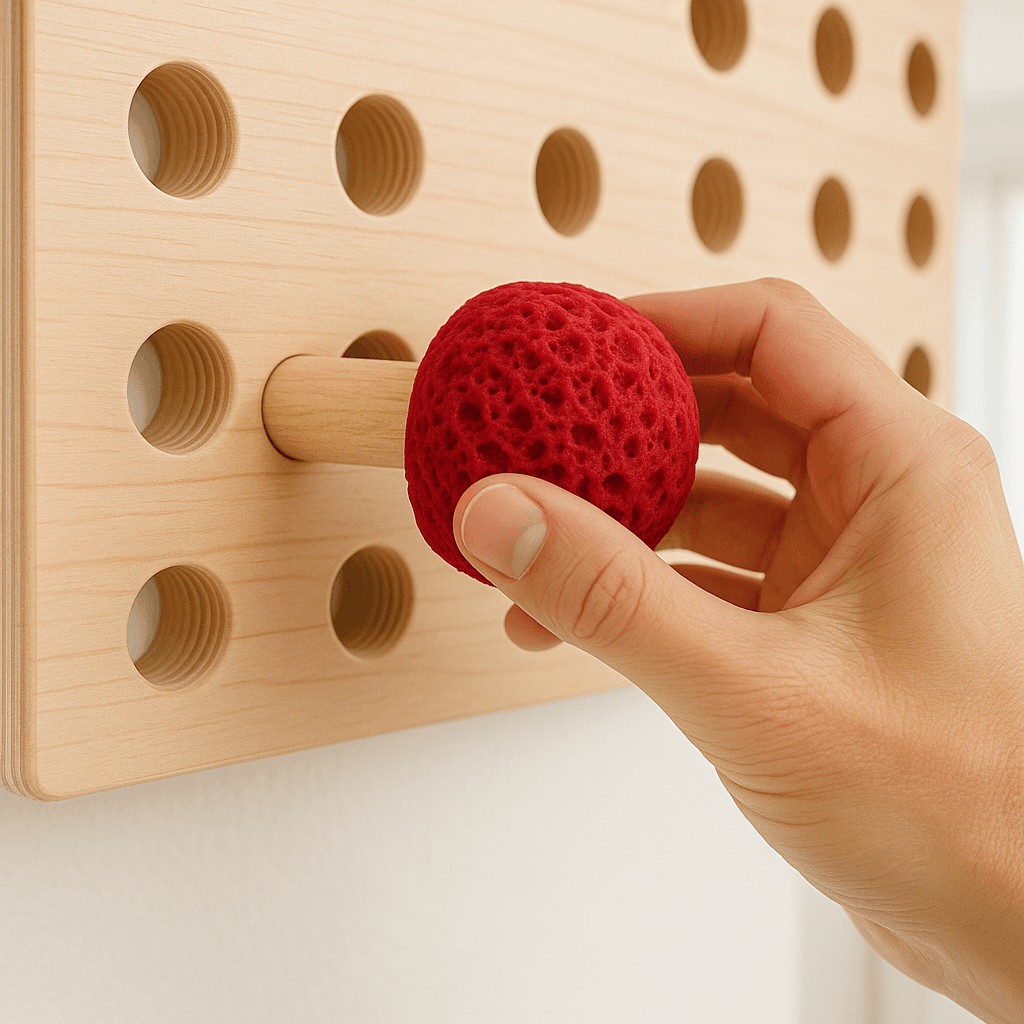
The pegboard is one of the most demanding yet effective tools for building functional upper body strength. Originally used by military and firefighter training programs, it's now a staple in climbing gyms and ninja warrior courses worldwide. This complete guide will teach you everything from your first ascent to advanced training protocols.
Why Train on a Pegboard?
Unlike traditional strength training, pegboard climbing requires coordination, technique, and mental fortitude alongside raw power. The benefits extend far beyond simple grip strength:
- Functional pulling strength: Develops real-world upper body power
- Grip endurance: Builds capacity for extended efforts
- Core stability: Engages your entire core to prevent swinging
- Mental toughness: Pushes through the burn and discomfort
- Contact strength: Improves your ability to latch holds quickly
- Lat and shoulder development: Builds massive pulling muscles
Pegboard Basics: Before You Start
Equipment Requirements
- Pegboard dimensions: Typically 8-12 feet tall, 12-18 inches wide
- Hole spacing: Standard 6-inch vertical spacing between holes
- Peg size: Most use 1.25-1.5 inch diameter wooden dowels, 30mm being most common
- Installation: Must be securely mounted to wall studs or structural supports
- Safety: Use crash pads or mats underneath for falls
Prerequisites
Before attempting pegboard training, you should be able to:
- Perform 10+ strict pull-ups
- Dead hang from a bar for 60+ seconds
- Complete 5+ one-arm hang transitions (assisted is fine)
If you can't meet these standards yet, focus on building baseline grip strength first.
Basic Technique Breakdown
The Standard Climb
Step-by-step progression:
- Starting position: Grip both pegs at shoulder height, feet off ground
- First move: Pull hard with your bottom arm while reaching high with your top arm
- Peg placement: Insert peg into next hole with conviction (hesitation wastes energy)
- Weight transfer: Shift weight to new peg immediately
- Remove lower peg: Pull it out quickly and prepare for next move
- Repeat: Continue alternating arms until you reach the top
Common Mistakes to Avoid
- Swinging: Engage your core to keep body stable and close to the board
- Hesitant peg placement: Commit to each move fully—doubt wastes energy
- Wrong grip: Use a full-hand wrap, not just fingers
- Looking down: Keep eyes on your next target hole
- Over-gripping: Relax your grip slightly between moves to conserve energy
Pro Tip: Texture Makes All the Difference
Smooth wooden pegs can be slippery, especially with sweaty hands. Adding textured covers to your pegboard dowels dramatically improves grip security and builds skin resilience simultaneously. Many athletes report 20-30% improvement in climb consistency after adding texture.
Progressive Training Protocol
Phase 1: Learning the Movement (Weeks 1-2)
Goal: Complete your first full ascent
- Frequency: 2-3 sessions per week
- Workout structure:
- - Warm-up: 5 pull-ups, 30s dead hang
- - Practice: 3-5 climb attempts, rest 3-4 minutes between
- - Assistance: Use a step stool or have a spotter help
- - Focus: Perfect technique over speed
- Success metric: Complete one unassisted ascent by end of week 2
Phase 2: Building Endurance (Weeks 3-6)
Goal: Increase volume and consistency
- Frequency: 3 sessions per week
- Workout A (Monday): Volume day
- - 5 ascents with 3-minute rest
- - Focus on steady pace
- Workout B (Wednesday): Technique day
- - 3 ascents focusing on minimal swing
- - Practice one-arm locks at various heights
- - Rest as needed
- Workout C (Friday): Timed climbs
- - 3 ascents for speed
- - Track your times, aim to improve each week
Phase 3: Advanced Performance (Week 7+)
Goal: Develop power and competition readiness
- Weighted ascents: Add 5-10 lbs in a weight vest
- One-arm reaches: Skip holes by reaching further
- Descents: Climb down (significantly harder than ascending)
- Interval training: 30 seconds on, 30 seconds off for 5 rounds
- Competition simulation: Multiple rounds with minimal rest
Sport-Specific Applications
For Climbers
Pegboard training directly translates to climbing performance:
- Contact strength: Similar to latching a dyno or deadpoint
- Lock-off power: Holding static positions on overhangs
- Endurance: Sustained efforts on long routes
- Mental game: Pushing through pump on project attempts
Integrate 1-2 pegboard sessions per week during strength phases. Reduce frequency during sending seasons to avoid overtraining.
For Obstacle Course Athletes
Pegboards are common in obstacle course racing. Competition-specific training:
- Speed work: Complete ascents in under 15 seconds
- Pre-fatigued training: Do pegboard after other grip-intensive obstacles
- Varied hole patterns: Practice with different spacing to simulate course variations
- Mental rehearsal: Visualize perfect executions under pressure
For CrossFit & Functional Fitness
Pegboards are increasingly common in CrossFit competitions:
- AMRAP integration: Include ascents in metabolic conditioning workouts
- Chipper WODs: Combine with other movements (burpees, box jumps, etc.)
- Time domains: Practice both sprint efforts and longer grinding sets
Advanced Variations & Challenges
L-Sit Climbs
Hold an L-sit position (legs parallel to ground) throughout the entire climb. Builds insane core strength and control.
One-Peg Climbs
Use only one peg, moving it hand-over-hand. Requires exceptional reach and lat strength.
Rope-Free Climbs
Challenge yourself to climb without using your legs to generate momentum. Pure upper body power.
Competition Variations
- For time: Fastest ascent wins
- For reps: Most ascents in a given time period
- Up-down-up: Ascend, descend, ascend again
- Blindfolded: Rely on proprioception and muscle memory
Recovery and Injury Prevention
Common Issues
- Elbow tendinitis: From excessive volume without adequate rest
- - Prevention: Limit to 3 sessions per week, include eccentric exercises
- Shoulder impingement: From poor technique or overhead fatigue
- - Prevention: Maintain good posture, strengthen rotator cuff
- Finger strain: From over-gripping or inadequate warm-up
- - Prevention: Warm up thoroughly, work on skin conditioning
Recovery Protocol
- Between sets: 3-5 minutes minimum rest
- Between sessions: 48 hours minimum for beginners, 24-48 for advanced
- Active recovery: Light cardio, mobility work, massage
- Nutrition: Adequate protein (1.6-2.2g per kg bodyweight) for tissue repair
Upgrade Your Pegboard Training
Take your pegboard training to the next level with FrictionForm textured peg covers. Transform smooth dowels into grip-building, skin-conditioning training tools:
- • Improve grip security by 20-30%
- • Build skin resilience for outdoor climbing
- • Easy installation with no tools required
- • Choose textures to match your training phase
Key Takeaways
- Build baseline strength before attempting pegboard training
- Focus on perfect technique in early phases
- Progress volume gradually—2-3 sessions per week maximum
- Use textured pegs to improve grip and build skin resilience
- Allow adequate recovery to prevent overuse injuries
- Integrate sport-specific variations for your discipline
- Track your progress with timed ascents and volume metrics
The pegboard is one of the most effective tools for building functional upper body strength and mental toughness. Start with the basics, progress systematically, and you'll develop the pulling power and grip endurance to dominate whatever athletic pursuit you choose. Looking for more grip-focused training? Read our guide on ninja warrior grip training programs.